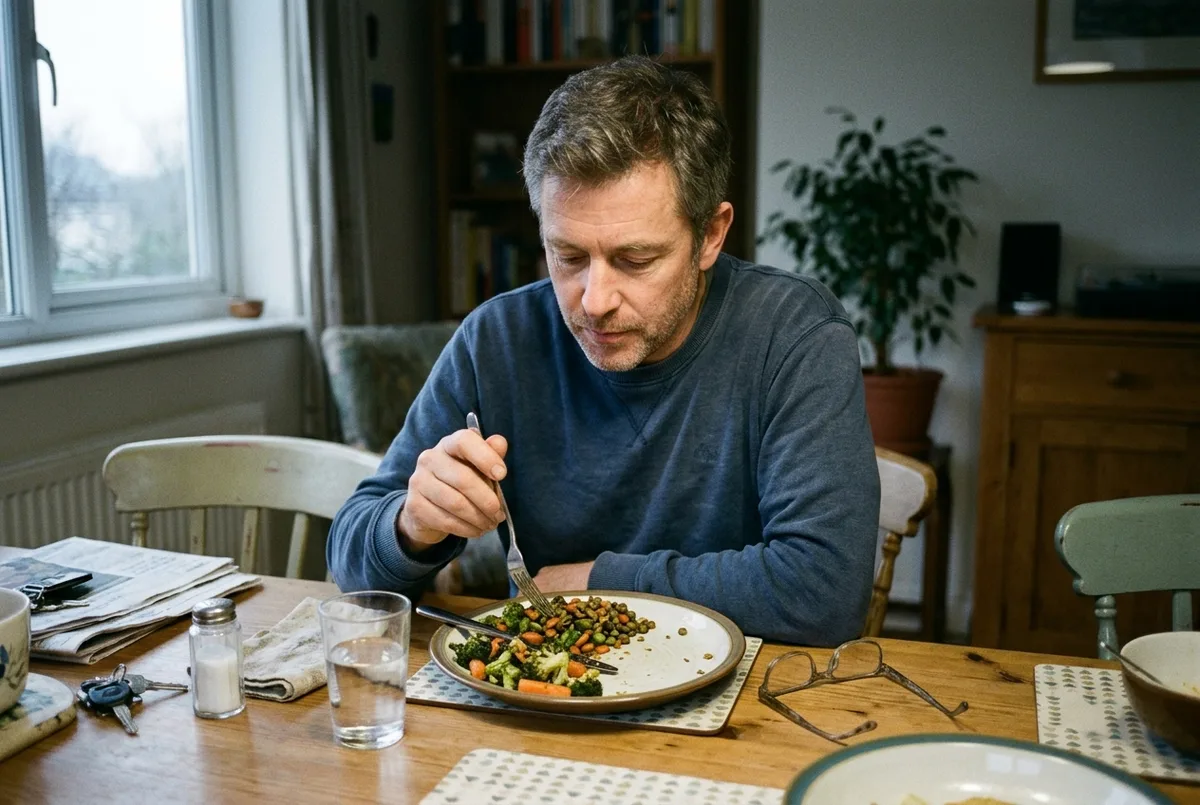
A man in his late 40s came to see me for his high blood pressure evaluation and follow-up. He was taking a medicine called amlodipine, 10 mg a day, and had no side effects from it. He was about 20 pounds above his ideal weight.
What did we change?
At that visit we talked about diet and lifestyle. We went through the Harvard Healthy Eating Plate together and encouraged portion control.
What happened six months later?
When he came back for his follow-up six months later, his blood pressure was down, and we lowered his amlodipine from 10 mg to 2.5 mg.
I congratulated him: losing weight helped us reduce his medicine. When I asked him what had helped him lose the weight, he named two things:
- Portion control.
- Eating fruit and vegetables before each meal.
Why does understanding your diet matter?
Understanding your diet can help you live longer, improve your health and reduce how many medicines you need.
This patient sees me four times a year. I explained that if we are able to stop his medicine, he can go back to one visit a year. He understood this, and he is motivated to do it.
Can every patient with high blood pressure come in less often?
When there is no heart damage, no kidney damage, and blood pressure is well controlled with diet and lifestyle changes, we can reduce the number of visits. It does not happen for every patient: it is decided case by case. This patient made the most of that opportunity.
We cannot promise once-a-year visits for high blood pressure. We see patients four times a year to help them understand lifestyle changes, put them into practice, and look for other causes of high blood pressure.
What if diet and lifestyle are not enough?
Another patient, a woman in her late 30s, came to us with high blood pressure caused by primary hyperaldosteronism: the adrenal gland makes too much of the hormone aldosterone, which makes the body hold on to salt. Diet and lifestyle changes alone cannot let her stop her medicines. She needs a medicine called spironolactone to block the effect of the hormone. We will write more about her care in a future post.
Can every patient stop their blood pressure medicine?
No. When high blood pressure is linked to weight and lifestyle choices, a healthier lifestyle improves blood pressure for some patients. Others need medicine for life.
- For some patients we can reduce their medicines.
- For some patients we can stop them.
- Patients with heart damage or kidney damage need blood pressure medicine for life.
- So do patients whose high blood pressure has another cause, such as primary hyperaldosteronism, pheochromocytoma (a rare, usually non-cancerous tumor of the adrenal gland) or sleep apnea.
How much can lifestyle changes lower blood pressure?
Use the Harvard Healthy Eating Plate as a guide for your meals. Each of these changes can lower your blood pressure by about:
- A low-salt diet: 5 points.
- Exercise: 5 points.
- Losing 10 pounds: 10 points.
- Cutting down on alcohol: 5 to 10 points.
This article is for general education and is not a substitute for personal medical advice. Medication changes should always be made with your own doctor.
Related conditions
Book an appointment
Choose a time online with Dr. Vijay Katari, MD at our Frisco or McKinney office, or call (214) 884-2774.